A 4-point inspection covers exactly four systems — roof, electrical, plumbing, and HVAC.
Here’s what gets documented in each, plus the red flags that fail a report.
What a 4-Point Inspection Covers
A 4-point inspection looks at exactly four systems — no more, no less. Here’s what a Fort Myers inspector documents in each one, and the issues that most often cause trouble.
- Roof. The inspector records the type or types of roof covering (shingle, tile, metal, flat, and so on), the roof’s age, its overall condition, and an estimate of the useful life it has left. This is the section that creates the most headaches for homeowners, because carriers assign set life expectancies to different roofing materials and generally won’t insure a roof with fewer than five years of estimated life remaining. Citizens and most private carriers work from broad benchmarks. Around 20 years for standard asphalt shingles, less for three-tab, and 25 to 50 years for tile. Visible damage, missing material, active leaks, or evidence of past leaks all get documented. If only part of the roof has been replaced, the inspector has to note what percentage was updated and when.
 |
 |
- Electrical. The inspector examines the main panel — its brand, age, amperage, and condition — and documents the wiring found throughout the home, whether copper, aluminum, cloth-jacketed, or some mix. Certain panel brands are known problems: Federal Pacific (Stab-Lok) and Challenger have well-documented safety histories and get flagged by virtually every carrier. Single-strand aluminum branch wiring, common in homes built in the 1960s and 1970s, is another serious concern — where it’s present, insurers usually require proof that a licensed electrician has remediated it using an approved method such as COPALUM crimping or AlumiConn connectors. Challenger brand panels are often found in Fort Myers 4-Point Inspections.
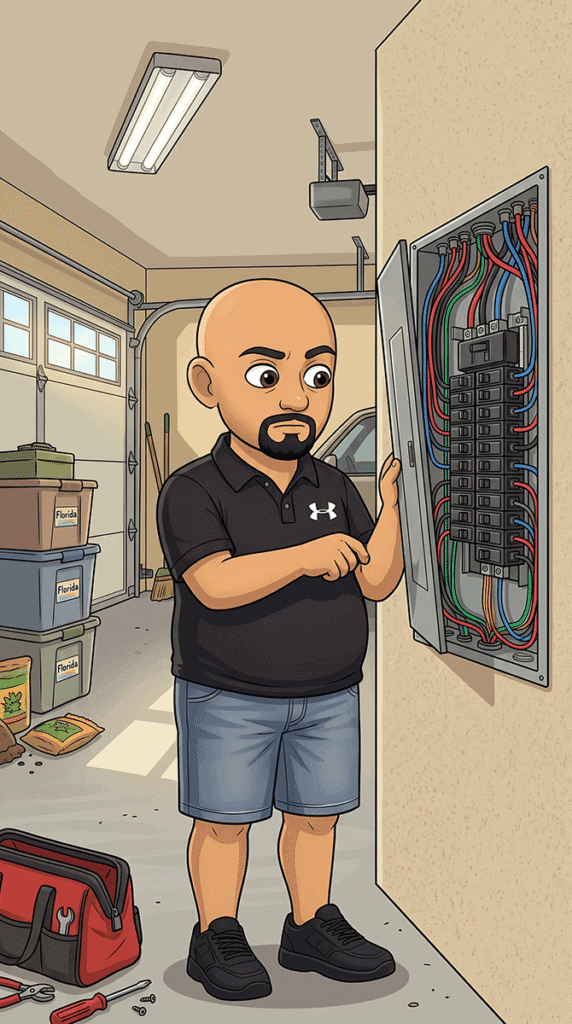
The 2025 update to the Citizens form added fields that specifically require inspectors to identify multistrand aluminum wiring and cloth-jacket rubber-insulated wiring, two types that were often misidentified or missed under the older form. Smaller but frequent findings, like double-tapped breakers — two wires landed on a single breaker terminal rated for one — also have to be documented.
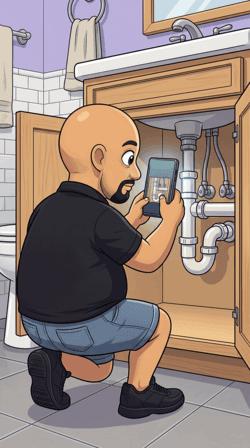
- Plumbing. The inspector identifies the supply and drain piping throughout the home (copper, PEX, CPVC, galvanized, cast iron, polybutylene, ABS, and the like) and records the age and condition of the water heater. Polybutylene piping — installed widely in Southwest Florida and Fort Myers homes from the late 1970s into the mid-1990s — is one of the biggest red flags on a 4-point. It has a documented history of failing early and is treated as uninsurable by most carriers. Galvanized steel supply lines, which corrode from the inside out over time, are commonly flagged as well. The water heater is checked for age, condition, and its temperature and pressure relief (TPR) valve. And, critically, whether that valve has a proper discharge pipe routed to the exterior or to an appropriate drain. A missing or improperly routed TPR discharge pipe is one of the most frequently found issues on any Fort Myers 4-point inspection. It’s usually a cheap fix, but it has to be corrected before the report will be accepted.
 |
 |
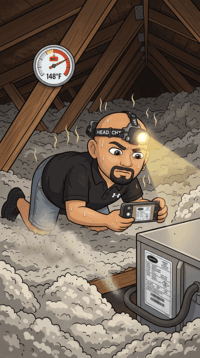
- HVAC. The inspector documents the age and condition of the heating and cooling system. This includes the air handler and the condensing unit. Carriers want confirmation that the home has a working central heat source. Homes relying only on portable heaters or window units can face coverage problems. Most central HVAC systems in Florida last roughly 15 years, and any system approaching or past that range gets noted. The inspector also looks for visible leaks, unusual corrosion, and general signs of whether the system has been maintained.
Find Out What Your Fort Myers 4-Point Inspection Will Cost in Under 10 Minutes
 |
 |
Lowest Price 4-Point Inspection? Why it might not be the wisest decision in the long run.